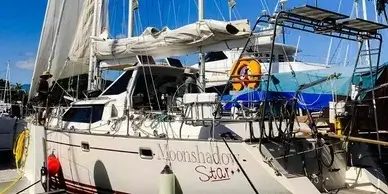
Yacht Delivery Solutions delivered this yacht twice. Once from NZ to Fiji.


Delivering a Fountaine Pajot Saona 47 from Tahiti to Opua, New Zealand is a classic South Pacific offshore passage that combines extended trade-wind sailing with a demanding final leg into New Zealand waters. It is a route regularly undertaken by cruising catamarans, but one that still requires professional planning, disciplined weather strategy, and a clear understanding of how a modern production catamaran behaves offshore.
For owners and brokers, this passage is not just about moving the yacht south. It is about protecting a high-value asset, managing weather risk across thousands of miles, and ensuring the vessel arrives in New Zealand in the best possible condition.
The Fountaine Pajot Saona 47 sits firmly in the modern cruising catamaran category. It is designed to be light, fast, and comfortable rather than heavily built for extreme conditions, and that design philosophy shapes how it should be delivered offshore.
In favourable trade winds, the Saona is an efficient passagemaker. The hulls are easily driven, motion is generally predictable, and average daily mileages are strong without excessive sail loading. This makes the Tahiti-to–New Zealand route well suited to the boat when sailed conservatively.
However, the Saona’s light displacement and high freeboard mean it is sensitive to sea state and wind angle. Upwind work in building seas is uncomfortable and hard on the structure, and sustained exposure to frontal systems should be avoided wherever possible. From a professional delivery standpoint, this reinforces the importance of seasonal timing and route selection rather than relying on the boat to “push through”.
Systems on the Saona 47 are typical of modern production catamarans. Electrical capacity is generally good, living systems are designed for comfort, and access for routine checks is reasonable. For offshore delivery, redundancy in navigation, communications, and critical spares is essential, particularly on a route with long stretches between meaningful support.
Departure from Tahiti places the yacht directly into the South Pacific trade-wind belt. This is one of the reasons Tahiti is such a common staging point for yachts heading south toward New Zealand.
The early phase of the passage typically involves steady east-to-southeast trade winds and long-period swell. For a Saona 47, this is comfortable and efficient sailing provided sail plans remain conservative and loads are kept balanced across both hulls. Professional delivery crews focus on reducing slamming and torsional stress by managing speed and avoiding aggressive sail combinations.
As the yacht progresses south, weather patterns begin to change. The trades weaken and give way to more variable systems influenced by mid-latitude fronts. This transition zone is where delivery experience matters most. Routing decisions here are based on synoptic-scale analysis rather than short-term forecasts, aiming to position the yacht for a controlled approach into New Zealand waters rather than chasing speed.
Unlike island-hopping routes further west in the Pacific, the Tahiti-to–New Zealand passage is often sailed as a single extended leg. That increases the importance of crew endurance, watch systems, and fatigue management. For catamarans in particular, maintaining consistent routines offshore helps prevent cumulative wear on steering, rigging, and sail-handling systems.
The final approach into Opua is the most weather-sensitive part of the delivery. New Zealand’s northern waters are affected by fast-moving fronts and strong westerlies, and timing arrival correctly is critical. Professional deliveries wait for a suitable window rather than forcing an entry under marginal conditions, prioritising asset protection over schedule pressure.
Seasonal timing is non-negotiable on this route. The preferred professional window for a Tahiti to Opua delivery is generally late April through early June. This avoids the peak of the South Pacific cyclone season while still remaining clear of early winter instability further south.
Catamarans like the Saona 47 benefit significantly from correct seasonal alignment. In settled trade-wind conditions, the boat is efficient and comfortable. In deteriorating weather, the same design characteristics that deliver performance can amplify motion and structural loading. Conservative timing dramatically reduces these risks.
Weather strategy on this route is not about predicting perfect conditions. It is about managing exposure. Professional delivery planning relies on large-scale pattern analysis, conservative thresholds, and the flexibility to slow down or alter course as systems evolve. As we often say, we use advanced routing, weather analysis, and voyage optimisation to minimise unnecessary fuel burn, risk, and cost.
A Tahiti-to–New Zealand delivery crosses thousands of miles with no practical diversion options once committed. Crew experience is therefore central to risk management. Structured watch systems, clear decision authority, and disciplined fatigue management are essential over a multi-week passage.
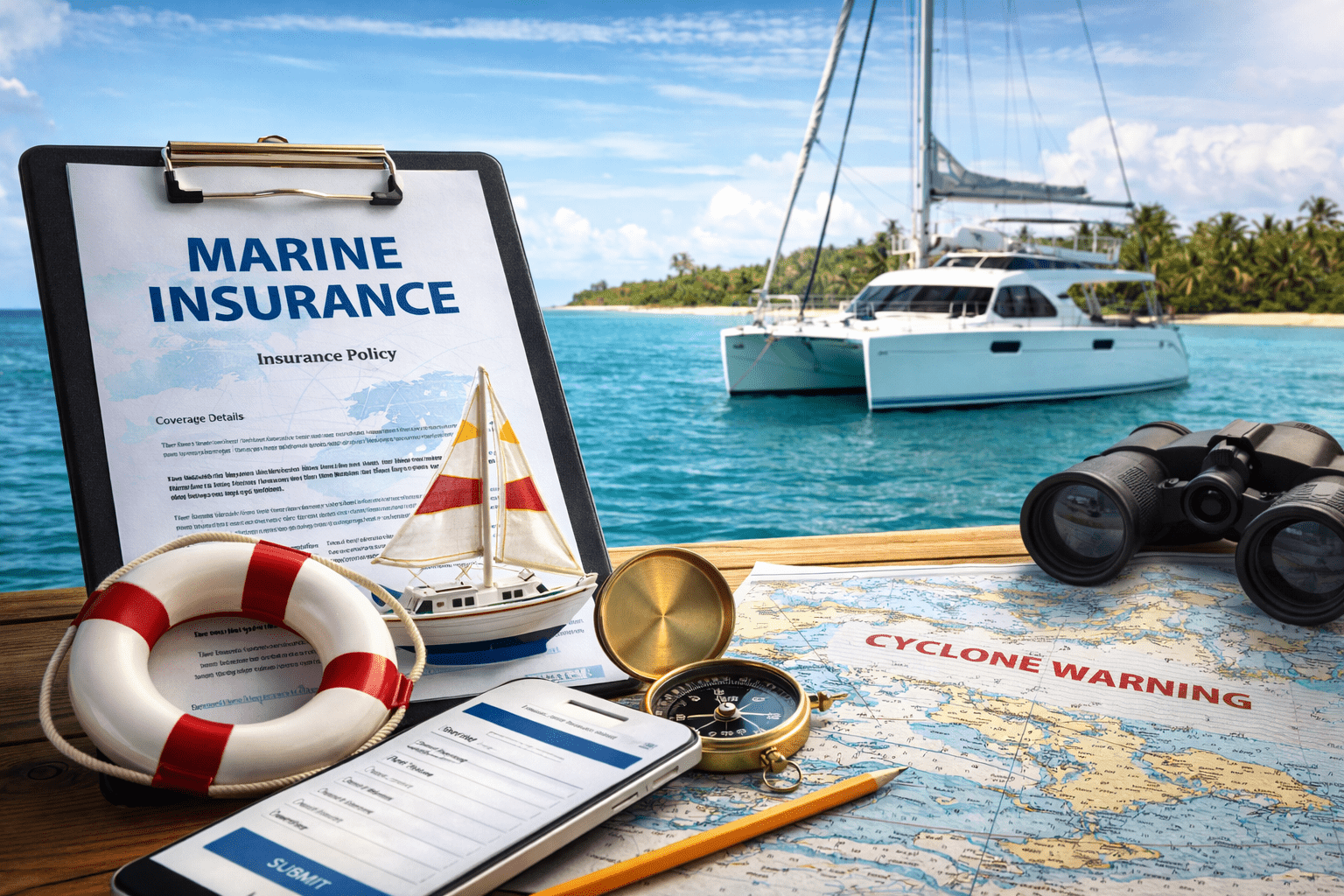
Insurance expectations also influence how these voyages are conducted. Underwriters increasingly look for professional crews, documented passage plans, and conservative weather decision-making on long-range catamaran deliveries. A rushed or poorly planned passage can compromise coverage and expose the owner to unnecessary financial risk.
From an asset perspective, the goal is to deliver the Saona 47 with minimal wear and no avoidable damage. That means managing speed, avoiding aggressive conditions, and treating the yacht as a high-value asset rather than a platform for testing limits. There is a clear difference between a casual skipper and a trusted professional moving a multimillion-dollar vessel.
Owners often assume that because catamarans are popular on this route, the delivery is straightforward. In reality, the popularity of the Tahiti-to–New Zealand passage simply reflects that it is one of the more logical routes when timed correctly. It is not forgiving of poor decisions.
Professional delivery reduces exposure to severe weather, ensures conservative routing through transitional zones, and delivers the yacht into New Zealand ready for cruising or sale. It also removes the pressure on owners to align personal schedules with narrow seasonal windows.
At Yacht Delivery Solutions,  we don’t just move catamarans south. We manage complex offshore passages, applying experience, disciplined planning, and region-specific knowledge across the South Pacific, New Zealand, and beyond.